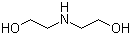
Industrial gas purification often depends on persuading a small molecule to react, then persuading it to let go again. Diethanolamine is one of the chemicals used for this purpose. Its nitrogen atom is connected to two hydroxyethyl groups and one hydrogen, making it a secondary alkanolamine. The amine supplies basic and nucleophilic behavior, while the two alcohol groups support interaction with water and provide additional sites for chemical modification. This combination connects gas treatment with a much wider range of industrial synthesis.
Diethanolamine is manufactured within the ethanolamine family by reaction of ammonia with ethylene oxide. Successive addition produces monoethanolamine, diethanolamine and triethanolamine, so production involves controlling and separating a mixture of related products. Adding a hydroxyethyl group changes more than molecular weight. It changes nitrogen substitution, the number of available nitrogen-hydrogen bonds and the balance between polarity and steric crowding. Those differences become important when choosing an absorbent or a starting material for further reactions.
In an acid-gas absorber, aqueous diethanolamine contacts a gas stream containing components such as carbon dioxide and hydrogen sulfide. The liquid captures these components through chemical equilibria as well as physical dissolution. A subsequent regeneration stage releases absorbed gas and returns the solvent to service. The useful material is therefore part of a circulating separation process. Absorption capacity, reaction rate and the energy needed for regeneration must be considered together; rapid capture alone does not define the best industrial solvent.
Carbon dioxide chemistry illustrates the difference between a basic solvent and a passive liquid. Because diethanolamine has a nitrogen-hydrogen bond, it can participate in carbamate formation. Proton transfer and reactions involving water contribute to the overall system. In 1983, stopped-flow experiments by Barth, Tondre and Delpuech examined these fast changes using an optical indicator. Their analysis required accounting for hydration reactions alongside carbamate formation. The result showed why an observed absorption signal cannot always be assigned to one elementary reaction.
Later studies explored how replacing part of the water with other solvents changes reaction kinetics. Work published in 2004 compared aqueous diethanolamine with mixtures containing ethylene glycol, diethylene glycol or polyethylene glycol. Solvent composition affected the measured rates and their concentration dependence. Such experiments connect molecular-scale proton transfer with process design: changing the liquid environment changes how readily reaction intermediates form and are converted, even when the named amine remains the same.
Beyond gas purification, diethanolamine is an intermediate for surfactants and other formulated industrial chemicals. Its hydroxyl groups can undergo transformations different from those of its nitrogen center. A diethanolamine-derived amide or salt is nevertheless a separate chemical entity, and its properties should not be substituted for those of the parent amine. The term DEA in a formulation also requires attention to whether it denotes unreacted diethanolamine or part of a derivative's name.
Regeneration closes the material cycle but does not eliminate operating constraints. A circulating solvent must remain useful through repeated absorption and release, so degradation and the buildup of unwanted components can matter even when the fresh amine performs well.
The secondary amine structure brings a further chemical consideration: suitable nitrosating conditions can produce N-nitrosodiethanolamine. This is a conditional reaction, not an inevitable consequence of contact with water. Diethanolamine itself has also undergone carcinogenic-hazard evaluation by IARC and is classified in Group 2B, possibly carcinogenic to humans. A hazard classification does not specify the risk from a particular exposure. Together, these features make controlled composition, exposure management and process conditions integral to the compound's industrial story.
References:
1. IARC. Diethanolamine. IARC Monographs, Volume 101. Lyon: IARC; 2013. https://www.ncbi.nlm.nih.gov/books/NBK373177/
2. Barth D, Tondre C, Delpuech JJ. Stopped-flow determination of carbon dioxide-diethanolamine reaction mechanism: Kinetics of carbamate formation. Int J Chem Kinet. 1983;15:1147-1160. DOI: 10.1002/kin.550151104. https://doi.org/10.1002/kin.550151104
3. Ali SH. Kinetic study of the reaction of diethanolamine with carbon dioxide in aqueous and mixed solvent systems: application to acid gas cleaning. Sep Purif Technol. 2004;38:281-296. DOI: 10.1016/j.seppur.2003.12.004. https://doi.org/10.1016/j.seppur.2003.12.004
|









 GHS05;GHS07;GHS08 Danger Details
 chemBlink Chemical Story